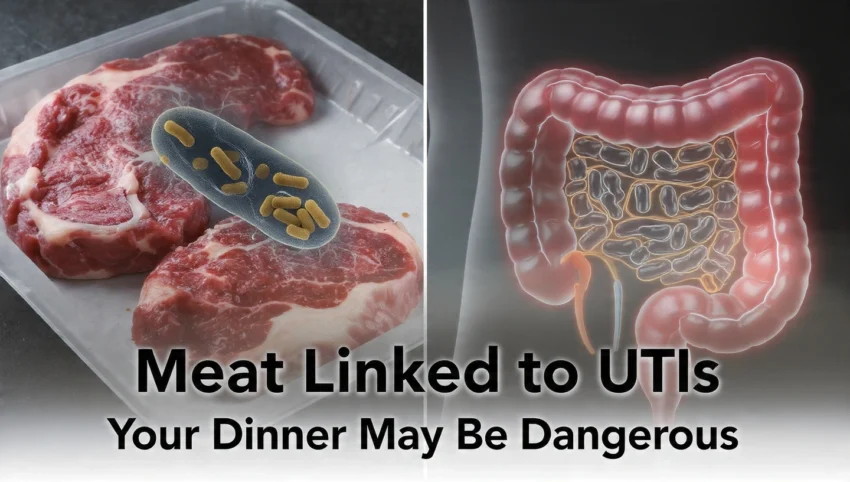
Urinary tract infections (UTIs) are among the most common bacterial infections worldwide, affecting millions of people every year. Traditionally, UTIs have been associated with factors such as hygiene, sexual activity, and anatomical differences, particularly in women. However, recent research has highlighted an often-overlooked contributor: contaminated meat.
A study published in the journal mBio has revealed that nearly 20 percent of UTIs in Southern California patients could be traced back to the consumption of turkey, beef, or pork contaminated with E. coli bacteria. This finding points to a potentially significant role of food safety in the development of UTIs, adding a new dimension to how medical professionals and the public understand and prevent these infections.
Dr. Martin Blaser, a microbiologist at Rutgers University, emphasized that this research forms part of a growing body of evidence indicating that food can be a source of urinary infections. He suggested that individuals experiencing UTI symptoms might benefit from reflecting on their recent food intake as a possible factor contributing to their condition.
This article delves into what this research means, how contaminated meat may lead to UTIs, who is most at risk, and what practical steps can be taken to reduce exposure to harmful bacteria.
Understanding the Link Between Meat and UTIs
The study in question involved collecting thousands of E. coli samples from both UTI patients and retail meat products. Using advanced genetic sequencing techniques, researchers were able to determine that a significant proportion of the bacteria responsible for UTIs in patients were genetically similar to strains found in meat products purchased in the same regions.
E. coli is a type of bacteria normally present in the intestines of humans and animals. While most strains are harmless, certain pathogenic strains have the ability to cause urinary tract infections when they reach the urinary system. Contamination can occur at various points during the meat production process, from slaughter to packaging. Even small amounts of bacteria can survive on meat surfaces if proper handling and cooking practices are not followed.
What makes this study particularly noteworthy is its quantitative estimation of risk. Nearly one in five UTIs could be linked to contaminated meat, suggesting that foodborne bacteria are a more common factor in urinary infections than previously recognized.
How Contaminated Meat Can Cause UTIs
Many people may wonder how bacteria present in meat could end up causing a urinary tract infection. The process, while indirect, is biologically plausible. Here’s a simplified sequence:
-
Contamination and Handling: Raw meat contaminated with E. coli can transfer bacteria to hands, utensils, and kitchen surfaces during preparation.
-
Ingestion or Cross-Contamination: Bacteria can enter the human gut either through accidental ingestion or through cross-contamination with other foods.
-
Colonization: Some E. coli strains have the ability to survive and multiply in the gut without causing immediate symptoms.
-
Migration to the Urinary Tract: For reasons that are still being studied, certain strains can migrate from the gut to the area near the urethra, especially in women. Once they enter the urinary tract, they can ascend to the bladder and cause infection.
This pathway is now being recognized as a legitimate foodborne route for the development of urinary infections, particularly for strains classified as extraintestinal pathogenic E. coli (ExPEC). These strains possess genetic tools that allow them to thrive outside the gut and cause disease in other parts of the body.
Implications for Public Health
The findings have substantial implications for public health policies and practices. Traditionally, strategies for preventing UTIs have focused on personal hygiene, hydration, and early medical intervention. However, if contaminated meat is a contributing factor, then food safety practices also become critical.
Preventing UTIs at the population level could involve:
-
Better monitoring of bacterial contamination in meat processing facilities
-
Stricter guidelines for meat handling and packaging
-
Public education on safe meat preparation and cooking practices
By addressing these factors, it may be possible to reduce the incidence of UTIs and mitigate the spread of antibiotic-resistant E. coli strains that are often found in livestock.
Who Is Most Vulnerable?
Not everyone consuming contaminated meat will develop a UTI. Certain populations are more susceptible:
-
Women: Due to anatomical differences, women are generally at higher risk for UTIs.
-
Older adults: Age-related changes in the urinary system and immune function increase vulnerability.
-
People with chronic conditions: Diabetes and other conditions that affect immunity or urinary function can elevate risk.
-
Those handling meat frequently: Individuals who prepare raw meat regularly without proper hygiene may be at higher risk.
Understanding these risk factors allows healthcare providers and individuals to take preventive measures tailored to their specific situations.
Reducing Your Risk
While it may be impossible to completely eliminate exposure to contaminated meat, certain practical steps can greatly reduce the risk:
-
Cook meat thoroughly: Ensure that internal temperatures are sufficient to kill harmful bacteria.
-
Practice kitchen hygiene: Wash hands, cutting boards, and utensils after handling raw meat.
-
Avoid cross-contamination: Keep raw meat separate from other foods, particularly those eaten raw.
-
Store meat properly: Refrigerate or freeze meat promptly and avoid leaving it at room temperature.
-
Be mindful of symptoms: Individuals experiencing UTI symptoms should seek medical advice and consider their recent food intake as a potential contributing factor.
These measures are simple yet effective ways to minimize the chance that bacteria from contaminated meat will contribute to infection.
The Role of Antibiotic Resistance
An additional concern highlighted by this research is the relationship between contaminated meat and antibiotic-resistant bacteria. Many livestock farms use antibiotics in animal feed, which can promote the growth of resistant E. coli strains.
When these bacteria cause UTIs in humans, treatment becomes more complicated. Standard antibiotics may not be effective, requiring stronger or longer courses of medication. This underscores the importance of both responsible antibiotic use in agriculture and careful selection of antibiotics in clinical practice.
What This Means for Consumers
This research should not be interpreted as a reason to avoid meat altogether. Rather, it highlights the importance of safe food handling and informed choices. Consumers who are aware of the potential risks can take proactive steps to protect themselves without needing to eliminate meat from their diets.
For individuals with recurrent UTIs, paying attention to dietary habits, particularly the handling and consumption of meat, may provide additional insights into potential triggers. Healthcare providers may also consider asking about diet history when evaluating patients with urinary infections.
The connection between contaminated meat and urinary tract infections represents a new perspective on an old problem. UTIs have traditionally been viewed as a matter of personal hygiene or anatomical susceptibility, but this research demonstrates that food safety is a significant factor for a subset of cases.
By understanding the role of contaminated meat, individuals can adopt practices to reduce exposure, and policymakers can implement strategies to improve meat safety standards. Ultimately, this research adds another layer to our understanding of UTIs and reinforces the importance of a holistic approach to prevention one that considers personal hygiene, healthcare access, and the food supply.
Medical Disclaimer: This article is for educational purposes only. It does not replace professional medical advice. Individuals experiencing UTI symptoms should consult a qualified healthcare provider for diagnosis and treatment.

Hello, I am Dr. Ashish. I have lot of experience in medical field and education, I have gained lot of knowledge in my entrance exam life and medical studies which I want to share with everyone so that I can help more and more people.