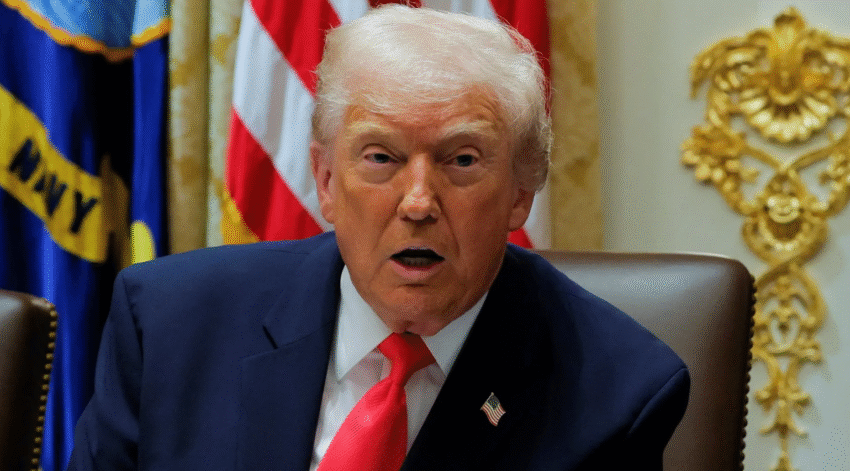
In a striking shift from traditional federal health-care policy, former President Donald Trump has urged Congress to stop sending Affordable Care Act (ACA) subsidy funds to insurance companies and instead give that money directly to the American people. His statement has opened a new front in the already-tense battle over health-care funding, government spending, and the future of the ACA.
The timing of Trump’s comments is crucial. The country is facing the threat of rising health-insurance premiums as enhanced ACA subsidies approach expiration. Millions of Americans who rely on marketplace insurance could see major cost increases if Congress does not act. Against this backdrop, Trump has positioned his proposal as an alternative to what he describes as a bloated, inefficient system that channels federal dollars to private insurers rather than to families who actually need support.
According to Trump, a direct-to-consumer funding model would give Americans more freedom to choose their own insurance plans without being tied to ACA marketplace structures. He argues that individuals could potentially buy better coverage and still keep money in their pockets. This approach mirrors long-running conservative ideas about redirecting health dollars into personal accounts, expanding private choice, and reducing the role of federally regulated insurance markets.
But while the idea is simple on the surface cut out insurers and empower individuals its implementation would be anything but straightforward. The current ACA subsidy framework is built around stabilizing insurance markets by guaranteeing that companies receive payments tied to enrollee income and plan type. Removing that structure without an equally reliable replacement could lead to fluctuations in premiums or even cause insurers to withdraw from markets where financial risk becomes unpredictable.
Critics of Trump’s proposal argue that direct payments may sound appealing but could leave many Americans underinsured. Without rules requiring minimum coverage standards, individuals might gravitate toward very cheap but limited plans, only to find themselves facing high out-of-pocket costs in emergencies. There is also concern that older adults, people with chronic illnesses, and low-income families would struggle to find comprehensive coverage if the ACA’s longstanding guardrails were removed.
Supporters of the idea counter that the current system is too rigid, too expensive, and too dependent on insurance company participation. They see Trump’s proposal as a way to reintroduce consumer choice into a system they feel has become overly bureaucratic. Several Republican lawmakers have acknowledged that while details are lacking, the concept deserves debate especially at a moment when Congress is deadlocked over funding and when households are bracing for potential premium spikes.
What happens next will depend heavily on congressional negotiations in the coming weeks. Lawmakers could choose to temporarily extend current ACA subsidies to avoid immediate market disruption. They could attempt a longer-term overhaul built around Trump’s direct-funding idea, though crafting such legislation would require significant bipartisan cooperation. Or they could fail to reach a deal, triggering higher premiums for many Americans in the new year and placing even more political pressure on both parties.
Regardless of the path chosen, Trump has ensured that health-care reform specifically, who receives federal dollars and how will remain a central national issue. The debate touches not only on insurance markets but also on broader questions of government responsibility, personal choice, and how the United States should structure a health-care system already burdened by high costs and uneven accessibility.
For millions of Americans watching closely, the stakes are personal. Whether funding flows to insurance companies or directly into their own hands could determine the affordability, stability, and quality of their health coverage in the years ahead.

Shreya Gandhi is a writer at MedicoDrive.com with a Master’s in English from Mumbai. She covers medicolegal cases, NMC/DCI updates, medical education, and health news from India and around the world. Passionate about journalism, she brings clarity to complex medical topics.