Team MD | Published: July 2, 2026
Scientists at the University of Minnesota have announced a major breakthrough in synthetic biology after developing what they describe as the world’s first synthetic cell capable of completing a full life cycle using only non-living chemical components.
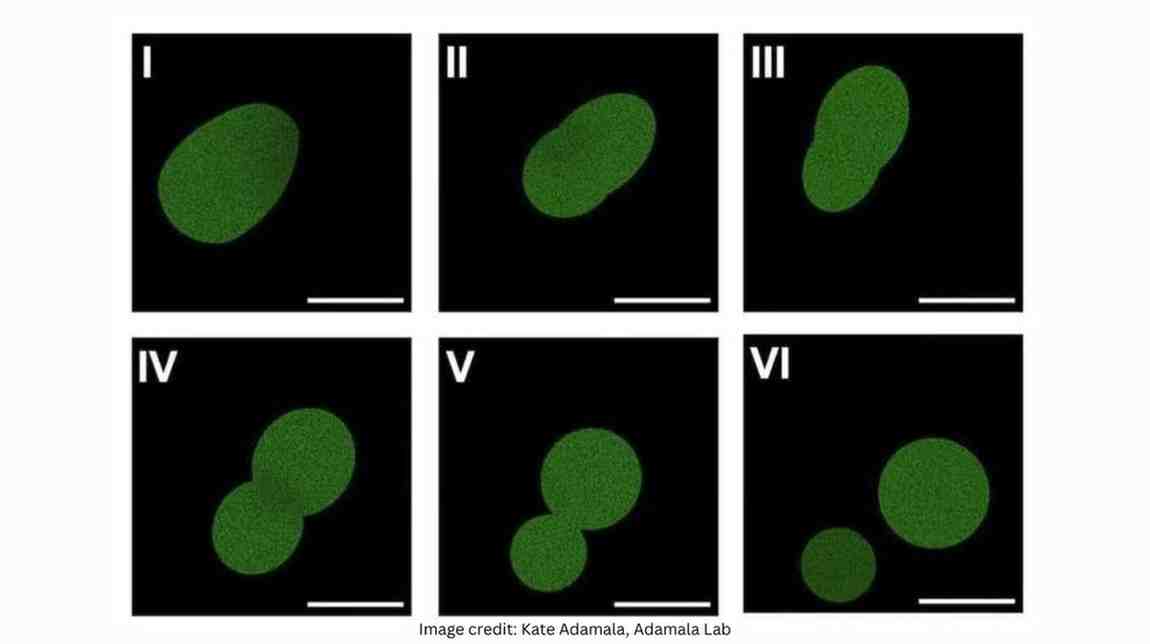
The laboratory-created cell, called SpudCell, can perform several of the key functions associated with living organisms. Researchers say it can absorb nutrients, grow, replicate its DNA, divide into new cells and even undergo a simple form of natural selection under controlled laboratory conditions. The achievement is being hailed as a significant step toward understanding the fundamental building blocks of life.
Unlike previous efforts that modified existing living cells, SpudCell was assembled entirely from chemically defined components. The research team designed the synthetic cell with a streamlined genome of around 90,000 DNA base pairs, allowing scientists to observe how essential cellular processes can be recreated without relying on a naturally occurring organism.
Despite the milestone, researchers emphasize that SpudCell is not considered a fully living organism. The synthetic cell still depends on externally supplied biological machinery, including ribosomes and proteins, to produce the molecules needed for survival. It also cannot continue reproducing indefinitely without laboratory support.
One of the study’s most notable findings came when researchers introduced a genetic variation into the synthetic cells. During experiments, the faster-growing variant produced more offspring than the original version, demonstrating a basic form of natural selection. Scientists say this provides a powerful new platform for studying evolution in simplified biological systems.
The breakthrough could have wide-ranging applications beyond basic science. Researchers believe synthetic cells may eventually be engineered to manufacture medicines, develop new biomaterials, produce sustainable chemicals and help scientists better understand diseases at the cellular level. Because every component of SpudCell is known and carefully controlled, scientists can precisely modify its genetic instructions to test how individual biological processes work.
The research also offers new insights into one of biology’s oldest questions: how life first emerged on Earth. By recreating essential cellular functions from non-living materials, scientists hope to better understand the transition from simple chemistry to the earliest forms of life billions of years ago.
Researchers caution that the technology remains in its early stages. The study has been released as a scientific preprint and has not yet completed peer review. Additional research will be needed before synthetic cells can be used in medical treatments or industrial applications.
Even so, experts say the development marks one of the most significant advances in synthetic biology in recent years. While SpudCell is not yet an artificial life form in the traditional sense, it demonstrates that many of the core processes associated with living cells can be recreated from non-living chemical components, opening new possibilities for biological engineering and future scientific discovery.